lunedì 13 luglio 2020

13 Luglio Santi di Irlanda Scozia Galles Inghilterra


Saint DOGFAN (DOEWAN), marty par la main des païens dans le pays de Galles (Vème siècle). 


Saintes MAURE et BRIGIDE, nobles pérégrines irlandaises, martyres de la virginité à Balagny près de Creil en Picardie (Vème siècle). 
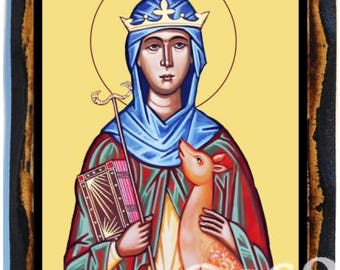


Sainte MILDRED, Anglaise de nation, moniale à Chelles en Île-de-France, puis abbesse de Thanet sur l'estuaire de la Tamise (vers 700). (Office composé en français par le père Denis Guillaume et publié au tome XV du Supplément aux Ménées.) 
Icon of St. Mildred of Minster by Marchela Dimitrova Size: H 26 cm by ...

Commémorée aussi le 13 juillet. Minster sur la presqu'île de Thanet, à peu 

près à 6 miles de Sandwich, a été fondé par sainte Ermenburge, la petite-fille 

de saint Ethelbert, le premier roi Chrétien du Kent. Mariée à un roi de Mercie

 Merewald, elle a eu 3 filles de lui: Mildred, Nilburge et Mildgyth. 

Lorsqu'Ermenburge est devenue veuve, elle est retournée dans le Kent, dont

 son neveu Egbert était roi, laissant Milburge à Wenlock, où elle s'établit dans

 l'abbaye construite par son père et dont elle devint plus tard l'abbesse. En 

arrivant à son ancienne demeure avec ses 2 autres filles, elle découvrit que 

ses plus jeunes frères, Ethelred et Ethelbright, avaient été assassinés par 

Thunor, homme de main d'Egbert. Elle obtint une terre en compensation 

pour leurs morts, qu'on appela "wergild" (somme donnée comme 

dédomagement), sur laquelle sera bâtit un monastère.


L'étendue de la terre à céder par Egbert avait été fixée par la superficie que 

l'animal préféré d'Ermenburge réussirait à parcourir, ce qui donna à peu près

 un millier d'acres (500 hectares?) de sol fertile, ce qui permettait à faire 

vivre celles qui rejoindraient la communauté. La paroisse hétérodoxe actuelle 

se tient sur le site du premier monastère, qui a été dédicacé par saint 

Théodore, archevêque de Cantorbéry, vers 670. C'est aussi lui qui a donné le 

voile à Ermenburge et l'a installée comme la première abbesse de ce

monastère, où elle a été connue sous le nom de Domna Eva.


Pendant ce temps, Mildred a été envoyée à Chelles apprendre la vie religieuse

 et elle a dût être contente en recevant l'ordre de retourner, une fois l'abbaye

 construite. Car pendant qu'elle était sur le Continent, elle avait été harcelée 

par un des princes locaux, qui avait tenté de la persuader de renoncer à sa 

vocation de moniale, mais elle garda fermement sa résolution et elle fit 

profession dès son retour dans le Kent.


Peu après, sa mère démissionna de la charge de l'abbaye en faveur de 

Mildred. Elle devint une saintes les plus célèbres et bien-aimées des Anglo-

Saxons. Dirigeant strictement et adroitement l'abbaye, elle garda toujours 

bonne humeur et beaucoup d'humilité envers ceux venant à elle, 

particulièrement envers les veuves et les orphelins, les pauvres et les affligés.

 Sa soeur Mildgylt embrassa aussi la vie monastique et fût pour un temps 

moniale à Eastry. Mais elle rejoindra probablement Mildred plus tard dans la 

communauté florissante à Minster et a probablement dû lui succéder comme 

abbesse à la mort de cette dernière. Finalement la communauté grandit 

tellement qu'il devint nécessaire de construire un plus grand complexe, et ce

 qui fût fait à quelques centaines de mètres de l'ancien complexe.


Minster a souffert des pilleurs venus de la mer comme la plupart des églises 

Chrétiennes sur la côte, et en 1035 le roi Canut consentit à la translation des

reliques de sainte Mildred à Canterbury, afin d'être enchâssées dans l'abbaye 

des saints Pierre et Paul. Une autre tradition dit que les reliques auraient été 

emmenées à l'abbaye à Lyminge et de là transférées par l'archevêque 

hétérodoxe Lanfranc à l'église du collège de Saint Grégoire qu'il a construit au

 Northgate de Cantorbéry.


Aux temps redoutables de la Dissolution, les bâtiments d'abbaye de Minster 

passèrent aux mains de séculiers et l'église monastique fut démolie. En 1937,

 un petit groupe de religieuses bénédictines hétérodoxes de l'abbaye de sainte

 Walburge (Eichstadt, Allemagne) occupa les restes de la vieille abbaye et une

 relique de sainte Mildred de Derenter est conservée dans l'autel de la petite

 chapelle qu'elles ont construite. Il y avait 10 dédicaces anciennes à sainte

 Mildred, 2 dans la Ville de Londres et 6 dans le Kent.


Tropaire de sainte Mildred ton 4


Par la prière constante et le jeûne fréquent, par les hymnes incessants et la 

grande humilité, la glorieuse Mildred abandonna les attraits de son rang royal, 

piétinant de ses pieds toute fierté et toute présomption de ce monde. C'est

 pourquoi, imitons ses vertus, afin que, libérés de tout attachement terrestre, 

nous puissions la rejoindre à la fête des Noces du Christ, notre Sauveur


Month of July

THE 13TH DAY

Commemoration of Our Venerable Mother Mildred,
Abbess of Minster-in-Thanet, Wonderworker of Kent


Composed by Reader Isaac Lambertson


St. Juthware, Virgin of Devonshire, Sister of Saint Sidwel


St. Mosiloc or Mothiolog, of Cloonatten, Parish of Kilmichael Oge, County of Wexford.


St. Ernin, or Arney, of Inis-caoin, now Inniskeen, Counties of Meath and Cavan.


Saint Cruimther Fionntain of Cill-Airthir, July 13


domenica 12 luglio 2020

12 Luglio Santi di Irlanda Scozia Galles Inghilterra


Cross ornamental page in Luxeuil style. Oviedo- style cross inside a round arch with  A and ω attached to the crossbeam. Braided band decoration, and right column with zigzag pattern.Once in the Lorsch library, Collectio Laureshamensis French canon of the Council and other ecclesiastical statutes. Biblioteca Apostolica Vaticana,Pal. lat. 574Folio2v  © 2014 Bibliotheca Laureshamensis - digital
Saint MENOU (MENULFUS), Irlandais de nation, peut-être évêque de Quimper en Bretagne, mort ermite à Mailly-la-Rose près de Bourbon-l'Archambault en Bourbonnais (VIIème siècle). 


Died 7th century. Saint Menulphus is said to have been an Irish pilgrim who was consecrated bishop of Quimper, Brittany. He died near Bourges on his return from Rome


St. Nazarus, Nazair, or Nasan, Bishop of Liethmore, County of Tipperar


St. Ultan, of Cork, County of Cork.


St. Colman, Priest, of Cluain Bruchais.


sabato 11 luglio 2020

11 Luglio Santi di Irlanda Scozia Galles Inghilterra


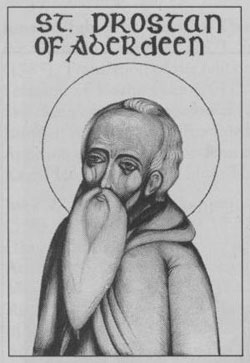
Saint DROSTAN, confesseur en Ecosse, premier abbé de Deer près d'Aberdeen (vers 610). 

Troparion of St Drostan tone 2


Abbot of Deer and disciple of Saint Colum Cille,/ who didst kindle


Christ's fire in the hearts of thy monks,/ pray for us, O Drostan, to


Christ our God,/ that our souls may be saved.


Visualizza immagine di origine


Saint SIGISBERT, Irlandais ou Ecossais de nation, moine de Luxeuil en Franche-Comté, puis premier abbé de Disentis dans les Grisons (636), et son compagnon saint PLACIDE, martyr à Coire dans les Grisons (630)


Saint THURKETYL (TURKETIL) le Danois, restaurateur du monastère de Crowland en Angleterre (975). 


St. Falbi, or Failbhe, Son of Culocha, of Disert Mic-Conlocha, in Cuircne, County of Westmeath.


St. Lonan, of Ard-Cruinn.

venerdì 10 luglio 2020

Santi di Germania e dei Territori del Nord Europa-periodo 1 luglio-10 luglio


Icon Stands №18  #Iconostasis #Orthodox #Church #Christian #icons #religious #paintings #Orthodoxchurches #iconostases #portable #icon #stands #GreekOrthodox #wood #decorativecarvings #decorativetables , icon stands for orthodox , small icon stands , church icon stands for


10  luglio

Saint WITGER, époux de sainte Amelberge, puis moine à Lobbes en Hainaut (fin du VIIème siècle). 


9  Luglio


Saint CYRILLE, évêque de Trèves en Rhénanie (vers 458). 


Saint AGILULF (AGILOLF), higoumène de Stavelot-Malmédy 
dans les actuels Cantons-Rédimés (Belgique), puis évêque 
de Cologne en Rhénanie, martyr dans les troubles qui agitèrent 
l'Eglise d'Allemagne à l'époque de Pépin le Bref (vers 751). 

8  Luglio


Saints KILIEN (KILIAN, CHILIEN, KILIANUS, CHILIANUS), Irlandais 

de nation, évêque, COLNAM (COLOMANN, COLMAN, COLOMMANUS), 

prêtre, TOTNAM (TOTNAN, TOTNANUS), diacre, et ERWALD, moine, 

martyrs à Wurtzbourg en Franconie (689). (Office composé en français 

par le père Denis Guillaume et publié au tome XV du Supplément aux Ménées.)


St. Kilian was an Irish monk who migrated to Germany. Having been consecrated 

Bishop, he set out with his 11 companions to evangelise the land. One of his converts 

was the Duke of Würzburg. During one of St. Kilian's absences from the country, 

the duke married unlawfully, and when on his return Bishop Kilian rebuked the two 

strongly, the illicit wife ambushed Bishop Kilian, his faithful Priest Colman, and his

 faithful Deacon Totnan, and killed them. All three martyrs are revered, especially 

amongst German folk, on their feast of July 8, which in German lands was kept with 

a vigil. An Anglo-Saxon Missal formerly preserved in Germany but now destroyed 

gives propers for St. Kilian and the vigil day.


Sainte LANDRADE, nièce de saint Pépin de Landen et de saint Arnould 

de Metz, solitaire, puis première abbesse de Munsterbilsen au pays de 

Gand (690). 


Saint DISIBODE (DISEN), Irlandais de nation, évêque en Rhénanie (vers 

700).


Sainte SUMNIVE (SUMMIVE, SUNIVE, SUNNIVA, SUNNIFA), vierge

 irlandaise, martyre en Norvège par la main des païens (Xème siècle).


Commemoration of the Holy Martyr Sunniva & Those with Her


Composed by Reader Isaac Lambertson


7  luglio


Saint NAVIT (NAVITE), évêque de Trèves en Rhénanie, martyr (IVème siècle).


Saint PALLADE, évêque et confesseur, apôtre des Scots (vers 450). 


Saint WILLIBALD (WILLEBAUD, GUILLEBAUD, WILLEBALDUS), fils de saint Richard, roi du

Wessex, évêque d'Eichstatt en Bavière (786).


6  LAUGLIO


Saint GOAR (GOHARD, GOARUS), natif du Poitou, prêtre et ermite près d'Oberwesel au 


diocèse de Trèves en Rhénanie (575)


5  LUGLIO


Saint NUMERIEN, archevêque de Trèves en Rhénanie (657 ou 666). 


3  LUGLIO


Saint GUTHALGON, roitelet irlandais chassé par des païens, ermite à Oostkerk en Flandre


 belge (VIIIème siècle)..


1 LUGLIO


Saint ROMBAUT, Anglais de nation, hiéromoine et thaumaturge, martyr assassiné à Malines dans la 

province d'Anvers en Flandre belge par des brigands à qui il avait reproché leurs vices (775). (Office 

composé en français par le père Denis Guillaume et publié au tome XV du Supplément aux Ménées.) 


Sainte REGINE (REINE), comtesse d'Ostrevant, puis veuve et moniale à Ostrevant près de 


Valenciennes en Hainaut (IXème siècle). 


10 luglio Santi di Irlanda Scozia Galles Inghilterra


Jerusalem: Iconostasis in Orthodox church - Gerusalemme Iconostasi by voyager601111 on Flickr.


Saint ETTON (ETTO, ZE), Irlandais de nation, évêque itinérant ou chorévêque, apôtre à Dompierre près d'Avesnes-sur-Helpe en Flandre française (vers 670). 


St. Cuain or Cuan, of Airbhre, in Hy Kinsellagh.


Saint Senan, July 10


Deacon Aedh, of Cuil-Maine, now Clonmany, County of Donegal


giovedì 9 luglio 2020

9 luglio Santi di Irlanda Scozia Galles Inghilterra


Department for External Church Relations of the Moscow Patriarchate


ST. BROCCAIDH, OF IMLEACH-BROCCADHA, NOW EMLAGH, COUNTY OF ROSCOMMON.

[FIFTH CENTURY.]


Sainte EVERILDE (AVERIL, EVERILDIS), fille d'un roi 
anglo-saxon, moniale à Everingham dans le Yorkshire (vers 700). 


Commemorated on July 9

St. Everilda (also spelled Everildis, Everild, Averil) of Everingham was a Saxon saint in the seventh century who was born into the Wessex nobility

In 635, she was converted to Christianity by St. Birinus, along with King Cynegils of Wessex. While still a young girl, she fled from home to become a nun, and was joined by Sts. Bega and Wuldreda.

St. Wilfrid of York made them all nuns at a place called the Bishop’s Farm, later known as Everildisham. This place has been identified with present-day Everingham.

St. Everilda eventually became abbess of a monastery where she gathered some eighty women.

She fell peacefully asleep in the Lord in 700.

By permission of www.orthodoxeurope.org


Saint Everild of Everingham (Old English: Eoforhild)[1] was an Anglo-Saxon saint of the 7th century who founded a convent at Everingham, in the English county of the East Riding of Yorkshire. All we know of her comes from the York Breviary.[2]

There are two churches dedicated to St Everilda - Nether Poppleton and Everingham.

She was converted to Christianity by Saint Birinus, along with King Cynegils of Wessex, in 635. Her legend in the York Breviary states that she was of the Wessex nobility. She fled from home to become a nun, and was joined by Saints Bega and Wuldreda. Saint Wilfrid of York made them all nuns at a place called the Bishop's Dwelling, later known as Everildisham. This place has been identified with present-day Everingham. She gathered a large community of some eighty women.


St. Condmac or Connmach, of Ath-Blair, or Átha-Silain.


mercoledì 8 luglio 2020

8 luglio Santi di Irlanda Scozia Galles Inghilterra


Sainte MORWENNA, sainte éponyme de Morwenstow en Cornouailles (Vème siècle?)


5th century. This is another of the confusing list of saints with the names of Modwenna and Moninne. She has given her name to several places in Cornwall 

https://www.facebook.com/photo?fbid=10158547489615768&set=gm.987723018324223


Saints KILIEN (KILIAN, CHILIEN, KILIANUS, CHILIANUS), Irlandais de nation, évêque, COLNAM (COLOMANN, COLMAN, COLOMMANUS), prêtre, TOTNAM (TOTNAN, TOTNANUS), diacre, et ERWALD, moine, martyrs à Wurtzbourg en Franconie (689). (Office composé en français par le père Denis Guillaume et publié au tome XV du Supplément aux Ménées.)


St. Kilian was an Irish monk who migrated to Germany. Having been consecrated 

Bishop, he set out with his 11 companions to evangelise the land. One of his converts 

was the Duke of Würzburg. During one of St. Kilian's absences from the country, 

the duke married unlawfully, and when on his return Bishop Kilian rebuked the two 

strongly, the illicit wife ambushed Bishop Kilian, his faithful Priest Colman, and his

 faithful Deacon Totnan, and killed them. All three martyrs are revered, especially 

amongst German folk, on their feast of July 8, which in German lands was kept with 

a vigil. An Anglo-Saxon Missal formerly preserved in Germany but now destroyed 

gives propers for St. Kilian and the vigil day.


Saint DISIBODE (DISEN), Irlandais de nation, évêque en Rhénanie (vers 700).


St. Withburga of Dereham, Virgin--Died March 17, c. 743; other feasts are celebrated on April 18 at Cambridge and on March 17; today's feast commemorates her translation.


Sainte SUMNIVE (SUMMIVE, SUNIVE, SUNNIVA, SUNNIFA), vierge irlandaise, martyre en Norvège par la main des païens (Xème siècle).


Month of July
THE 8th DAY

Commemoration of the Holy Martyr Sunniva & Those with Her

Composed by Reader Isaac Lambertson


Saint GRIMBAUD (GRIMAUD, GRIMAUX, GRIMBALDUS, GRIMVALDUS), moine de Saint-Bertin à Saint-Omer en Artois, puis premier higoumène de Winchester en Wessex (903 ou 904).


Saint EDGAR, roi d'Angleterre (975).


Died 975. Saint Edgar was wise in his choice of friends and advisors: Saint Dunstan. His reign was distinguished by a strong religious revival in England. He enjoyed a local cultus at Glastonbury


St. Urith of Chittlehampton, Virgin


Troparion of St Urith tone 5
O holy Virgin Martyr Urith/ who didst suffer martyrdom in a Devon village/ and didst patiently endure the jealousy of thy pagan stepmother;/ pray for the faithful/ who are today suffering persecution,/ that evil may be destroyed and that God may be glorified,/ that we may cry to thee: Rejoice, O Virgin Urith.